Safety Guides
EPIRB Explained: What It Is, How It Works, and When You Need One

In recent years, smartphone manufacturers have introduced “Emergency SOS via Satellite” features that promise to help connect you to rescue services when you’re deep in the wilderness without cellular coverage. It’s an impressive achievement. But it has also created confusion—across Aviators, Sailors and Outdoor enthusiasts—about whether a smartphone can now replace a dedicated Personal Locator Beacon (PLB) such as the rescueME PLB1.
At first glance, both seem to do the same thing: get help when you’re stuck somewhere remote. But in the real world—high winds, freezing temperatures, shock injuries, heavy rain, soaked clothing, dying batteries, or a rapidly unfolding emergency—the differences between a smartphone’s satellite SOS system and a PLB become critical. The two technologies are not remotely equivalent.
Below, we break down the realities of each system, how they function behind the scenes, and why Search and Rescue (SAR) teams globally still recommend carrying a PLB as your primary lifeline.
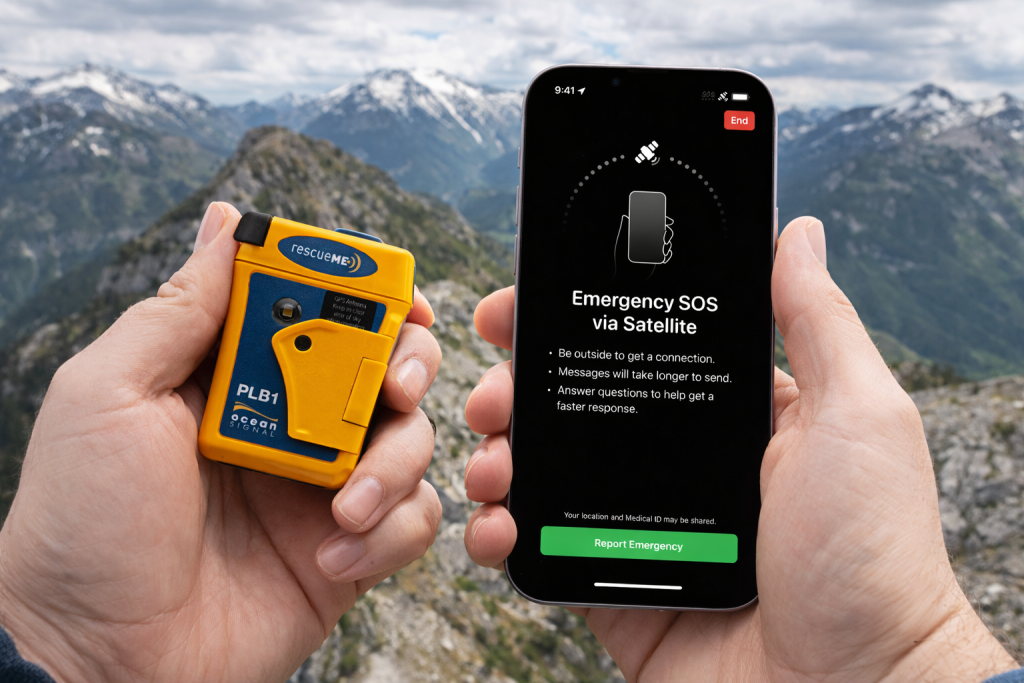
Smartphone Emergency SOS features are built around adapting a consumer device to perform a rescue-related task. A PLB is designed from the ground up for one singular job: broadcasting a distress signal that cannot be ignored, cannot be throttled, and cannot be interrupted with the touch of just one button.
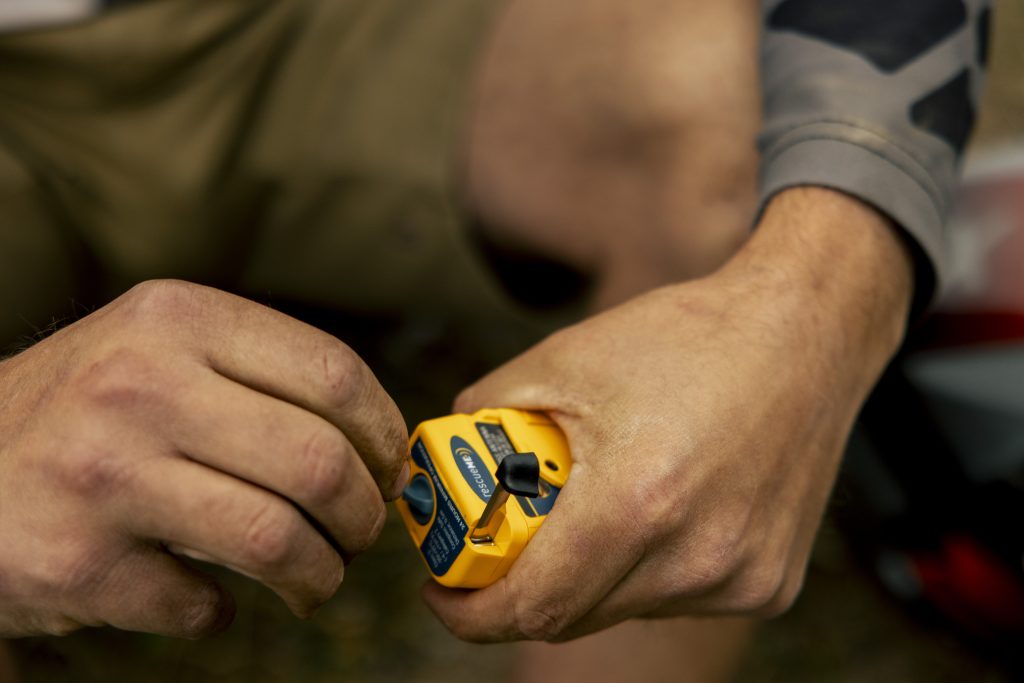
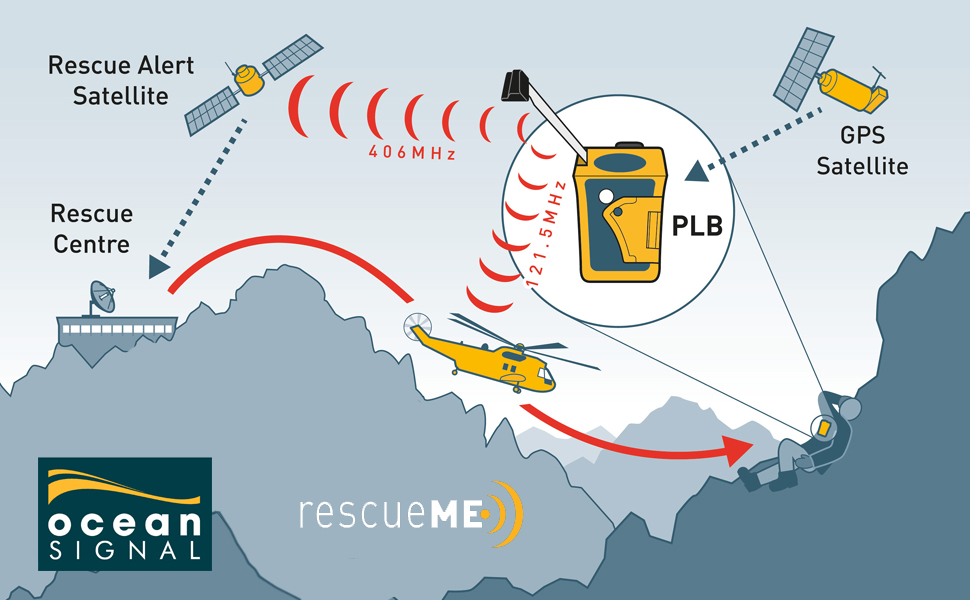
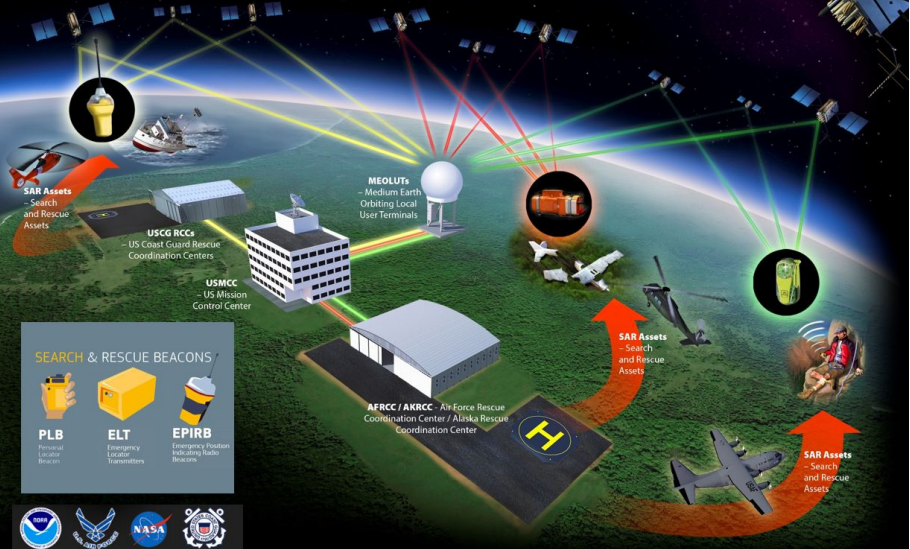
The PLB1 transmits on the internationally protected 406 MHz distress frequency, which is part of the Cospas-Sarsat system, a government-operated satellite rescue network used by the world’s official SAR agencies. When activated, the PLB1’s signal is received by a combination of LEOSAR, GEOSAR, and MEOSAR satellites, providing multi-layered redundancy and global reach.
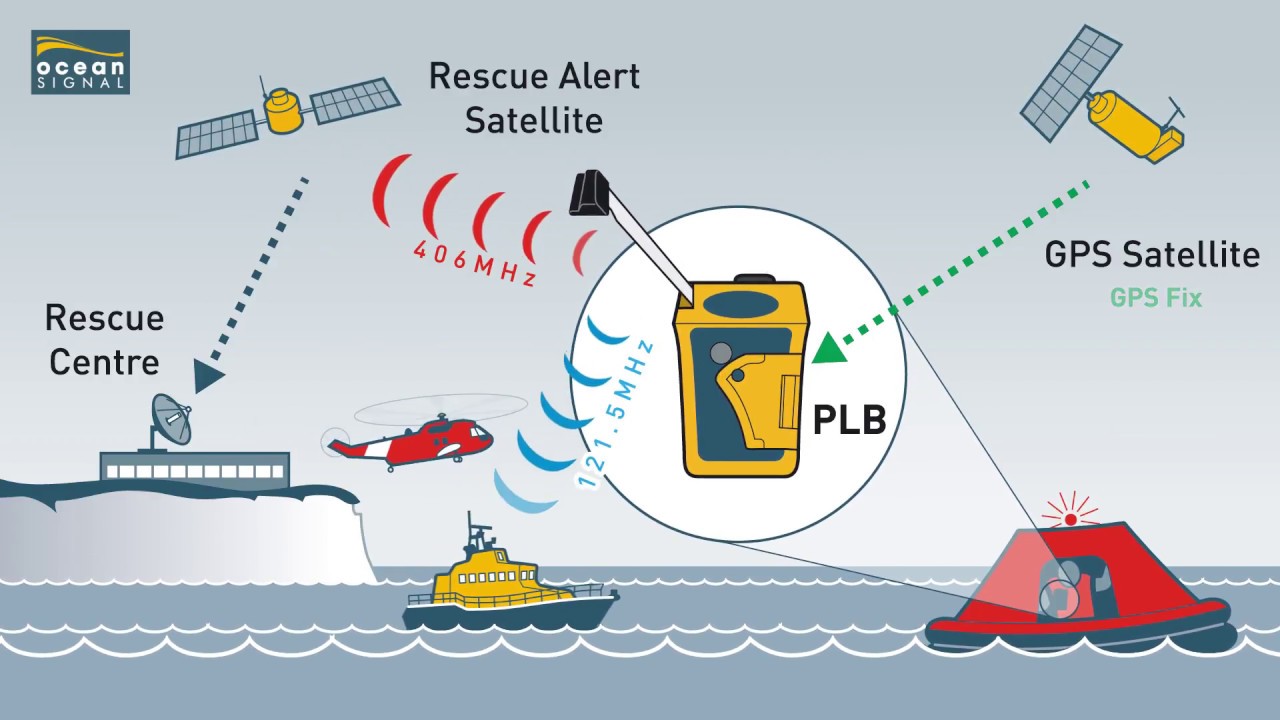
A smartphone, meanwhile, uses commercial satellites on L-band frequencies and relies on a two-way text session routed through a private emergency call center before SAR teams are notified. It’s clever, but it also introduces points of failure.
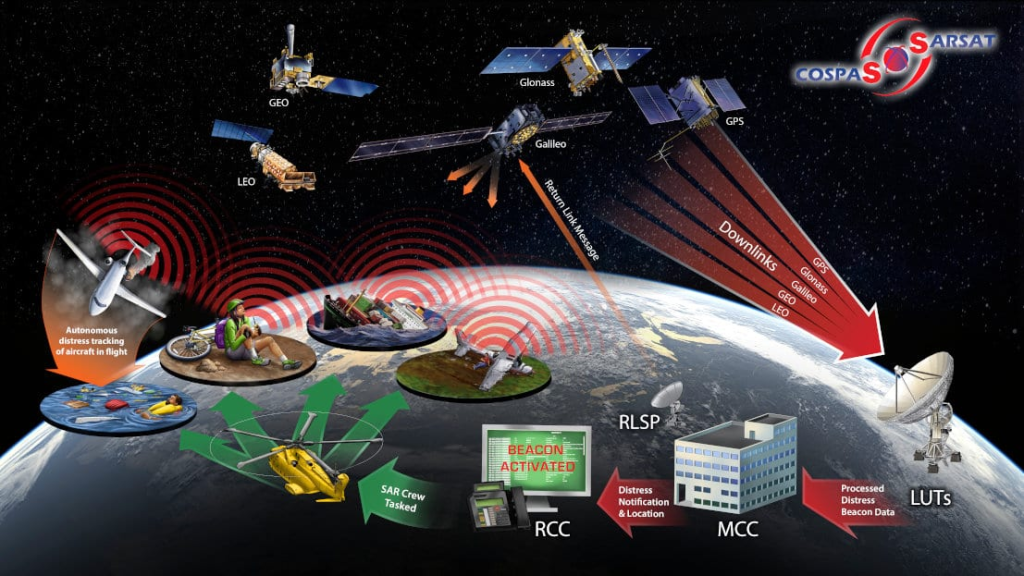
When you activate the PLB1, your distress signal goes directly to national rescue authorities via Cospas-Sarsat, no intermediaries, no waiting for a text handshake. MEOSAR satellites typically detect the beacon in under a minute.
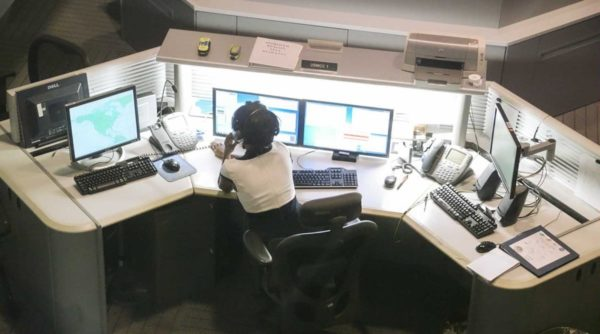
Cospas-Sarsat is the international, government-run satellite system that detects and routes distress alerts from 406 MHz beacons (PLBs, EPIRBs, ELTs) to rescue authorities, free to the user. When a beacon is activated, it transmits a unique digital ID (and, on GPS-enabled models, precise coordinates). That signal is picked up by satellites and forwarded to ground stations (Local User Terminals), which generate an alert message and pass it to a Mission Control Center. The MCC then delivers the alert to the appropriate Rescue Coordination Center (RCC) based on the beacon’s location and registration details, so responders can quickly verify the emergency, contact listed emergency contacts, and launch a targeted search and rescue response.
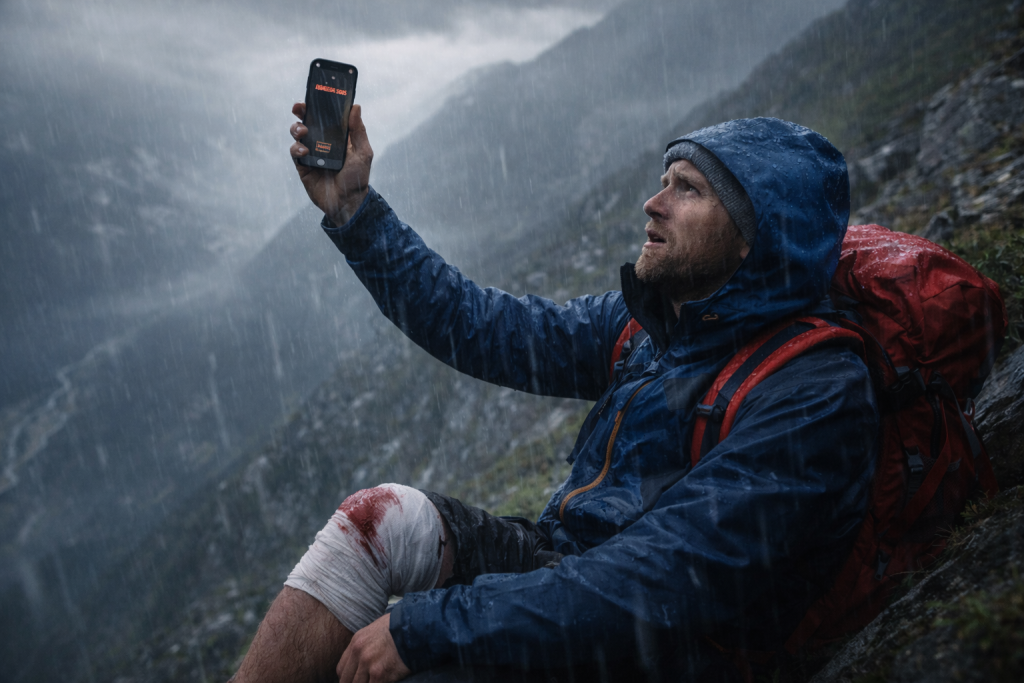
An iPhone Emergency SOS session, on the other hand, requires you to hold the phone toward a moving satellite, answer a quick questionnaire, and keep the phone aligned during the entire communication window. Steep valleys, forest canopy, storms, low battery performance, or simply numb hands can interrupt the connection. The system works—but it depends heavily on the user, environmental conditions, satellite availability, and the phone’s remaining power.
In urgent scenarios where every minute counts—cold-water immersion, bleeding injuries, hypothermia, avalanche burial, or nighttime offshore emergencies—reliability becomes the difference between life saved and life lost.
Apple’s satellite SOS system is built around Globalstar, a commercial low-Earth orbit (LEO) satellite operator. The iPhone contains dedicated RF hardware enabling direct satellite uplink when no cellular or Wi-Fi coverage exists.
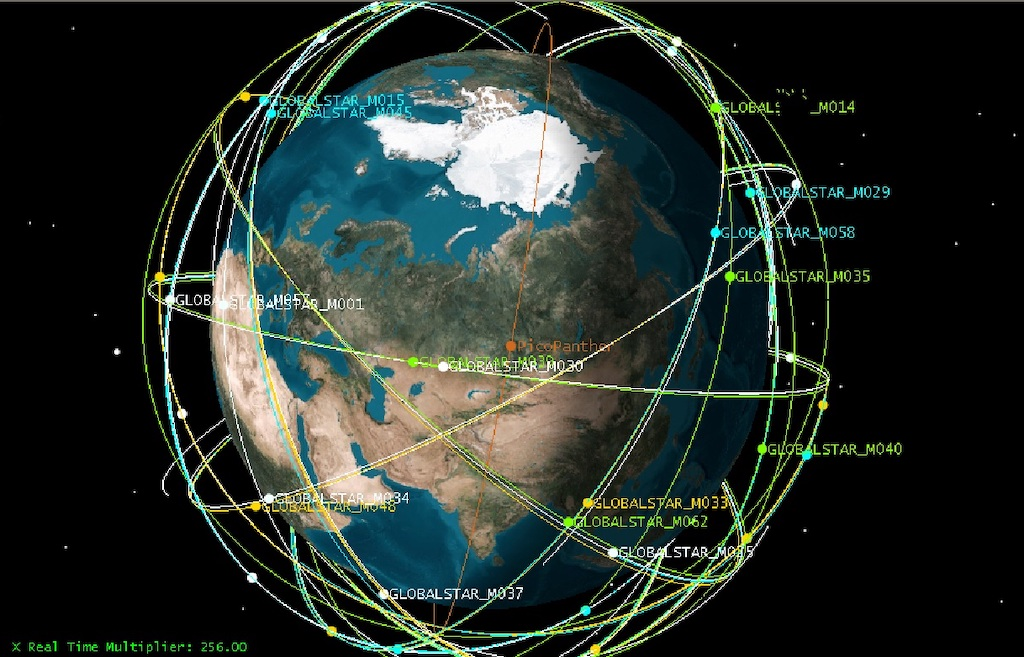
Apple’s emergency features transmit and receive via Globalstar’s L/S-band mobile satellite service (MSS) frequencies. These operate around:
These higher frequencies require clear line-of-sight and are easily blocked by:
Globalstar’s satellites use a “bent pipe” architecture, meaning they do not relay signals to other satellites. Instead, each satellite simply reflects your message down to a specific ground gateway. If the satellite cannot see both you and a gateway, service is unavailable—even if the satellite can see your phone.
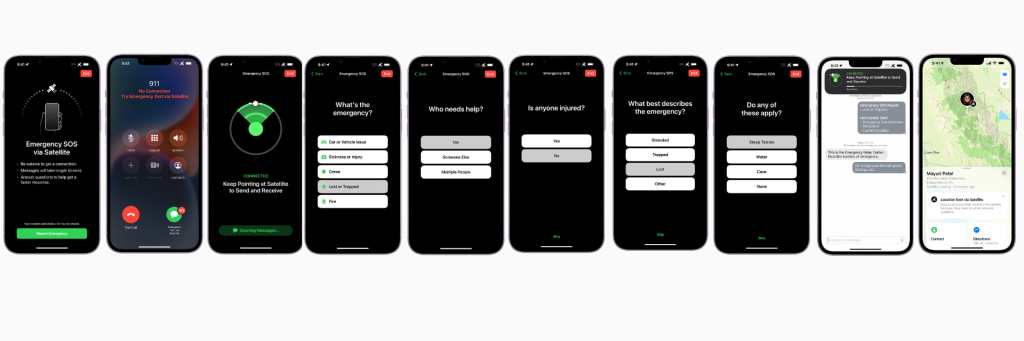
When you attempt satellite SOS on an iPhone (9 steps):
This is a hybrid system dependent on:
It’s innovative—but fragile under real-world stress.
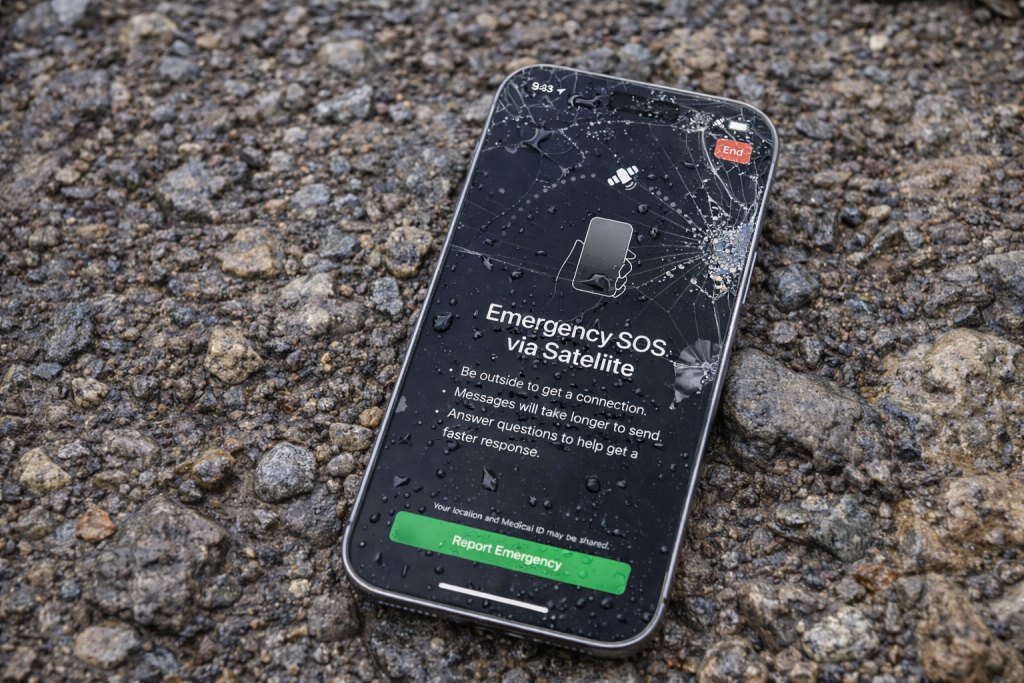
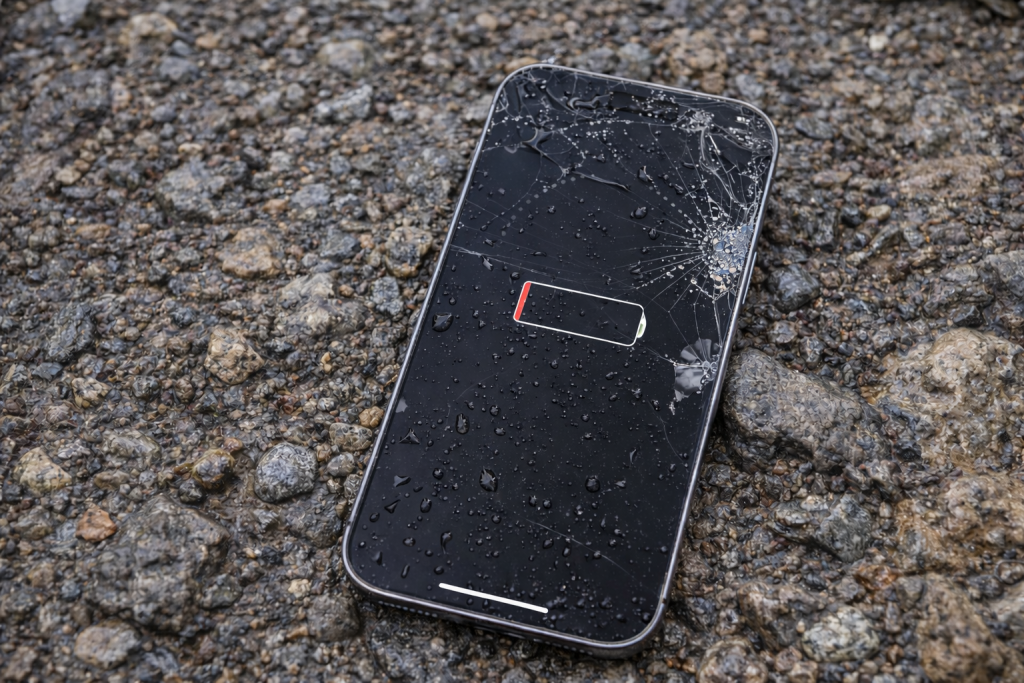
Cold temperatures are the enemy of lithium-ion smartphone batteries. At –10°C, the typical mountain morning, many phones lose 50% of their charge or shut down entirely. Water, shock, or a cracked screen can also render the SOS feature unusable.
A PLB1 doesn’t suffer from these weaknesses. It carries a sealed 7-year battery designed to deliver over 24 hours of continuous operation in extremes of cold (-20.C), wet (15M waterproof), and wind.
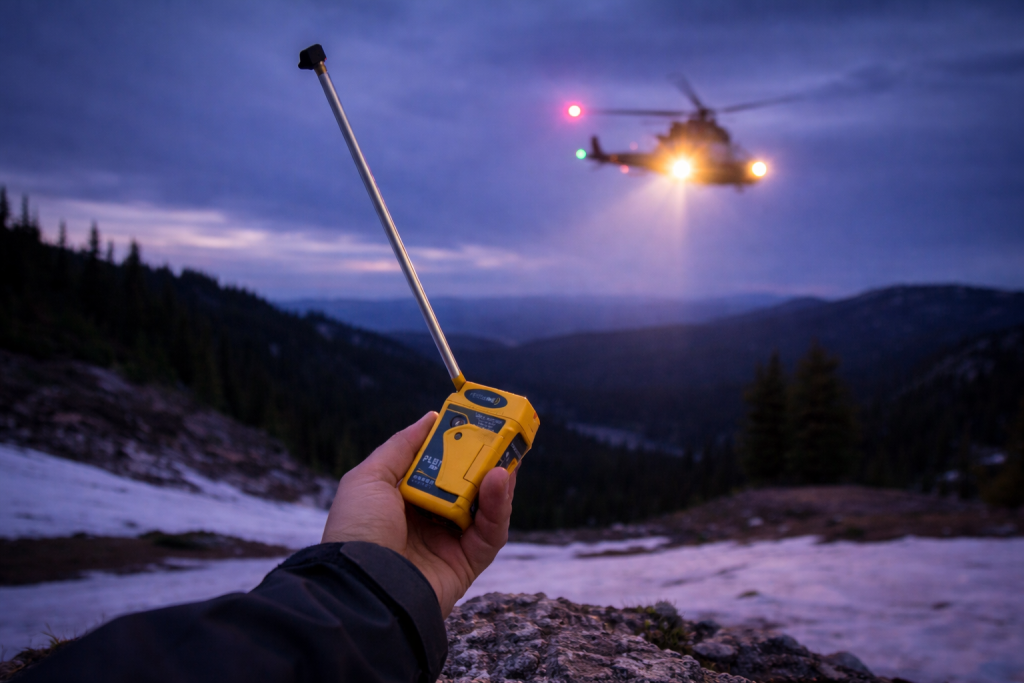
There are no apps, no touchscreens, no software failures, just a single mechanical activation that triggers a high-powered emergency transmission. For professionals in mountain rescue, aviation and offshore sailing, this simplicity is not a limitation. It is the whole point.
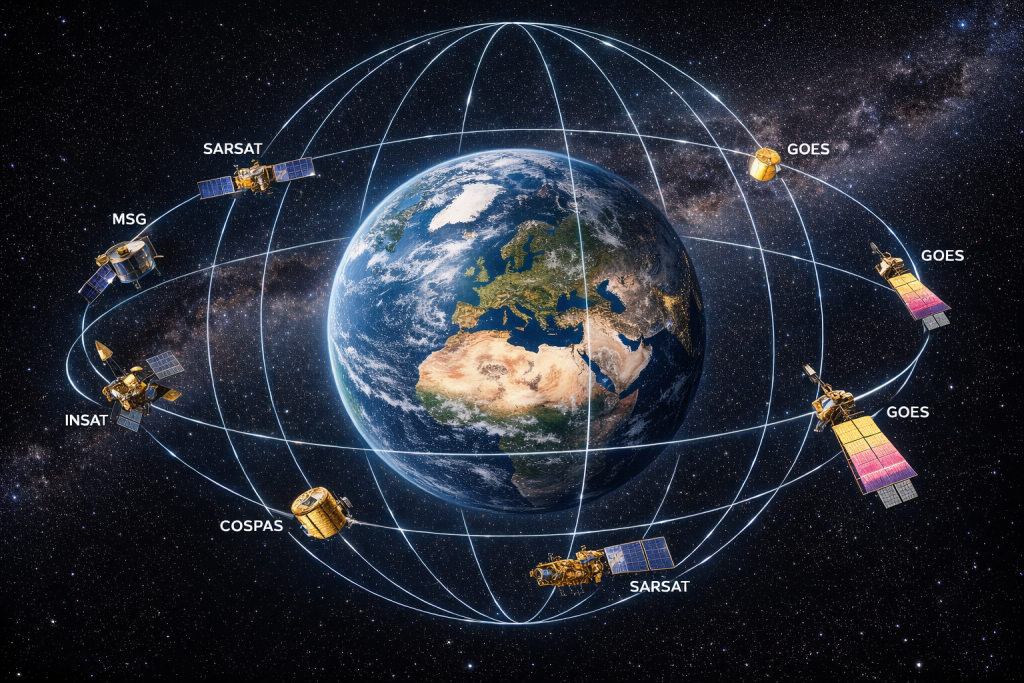
Out the box, the rescueME PLB1 (once activated) will transmit globally with just one push of a button – from the Alps to the Arctic. As of January 2026, the iPhone Emergency SOS satellite coverage is limited to the areas stated below.
| Feature | iPhone Emergency SOS (Globalstar) | Cospas-Sarsat (PLB/EPIRB) |
|---|---|---|
| Satellite Coverage | Australia, Austria, Belgium, Canada, France, Germany, Ireland, Italy, Japan, Luxembourg, The Netherlands, New Zealand, Portugal, Spain, Switzerland, United Kingdom, United States, Mexico + gateway availability | Truly global |
| High Latitude | Limited or no coverage near poles | Full coverage via MEOSAR satellites |
| Remote Ocean | Potential gaps if no gateway in view | Full coverage |
| Terrain Effects | Must have clear sky visibility | Clear sky helps locate stronger, but detection can still happen |
| Ease of Use | Included in phone; requires feature support | Requires dedicated beacon |
| Purpose Built | Consumer SOS; not SAR-specific | Designed solely for SAR alerting |
The PLB1 doesn’t just send a 406MHz distress signal, it also broadcasts a 121.5 MHz homing signal, allowing helicopters and ground teams to track you down to the final metres using their Direction Finders onboard. Smartphones offer no homing frequency. If your phone battery dies after sending your location, rescuers lose the ability to pinpoint your exact position. In snow, fog, dense bush, or rough seas, that homing beacon is often the single most important part of the rescue chain.
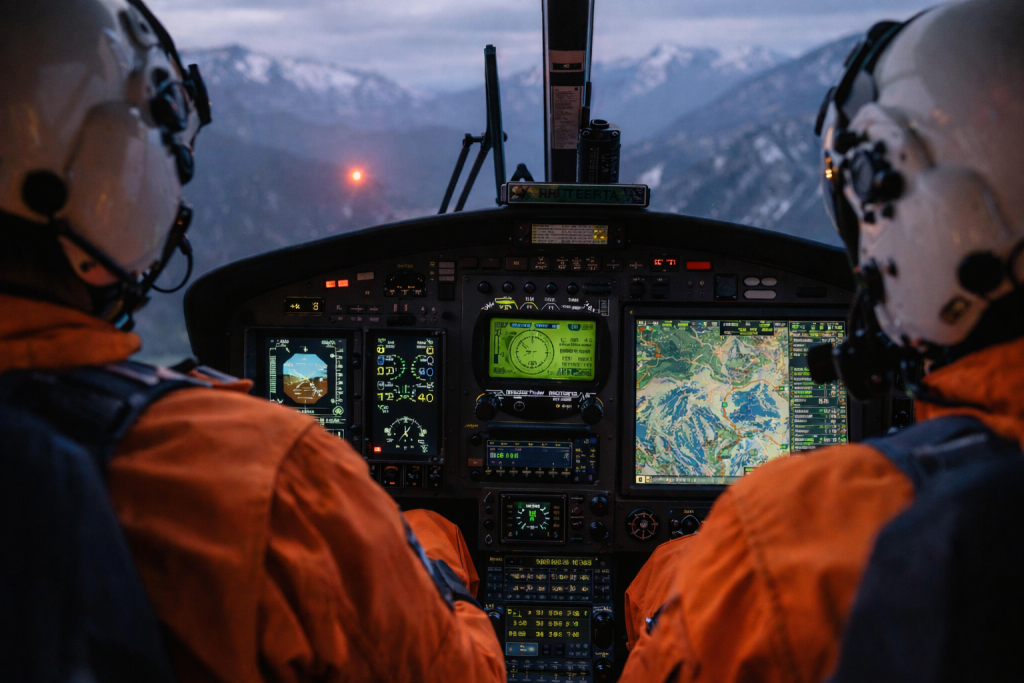
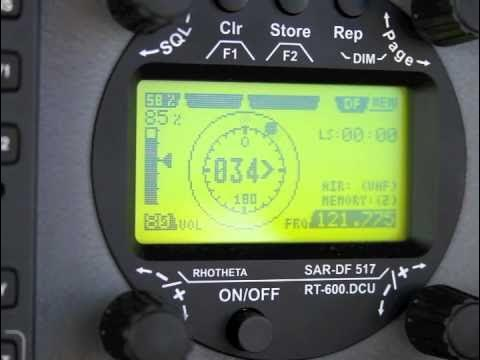
Smartphone-based systems also have significant coverage gaps. iPhone SOS, for example, is not available worldwide, is restricted in some jurisdictions, and is not optimised for deep alpine basins, offshore passages, or polar regions. The Cospas-Sarsat network used by PLBs, by contrast, is truly global and mandated internationally for search-and-rescue coordination.
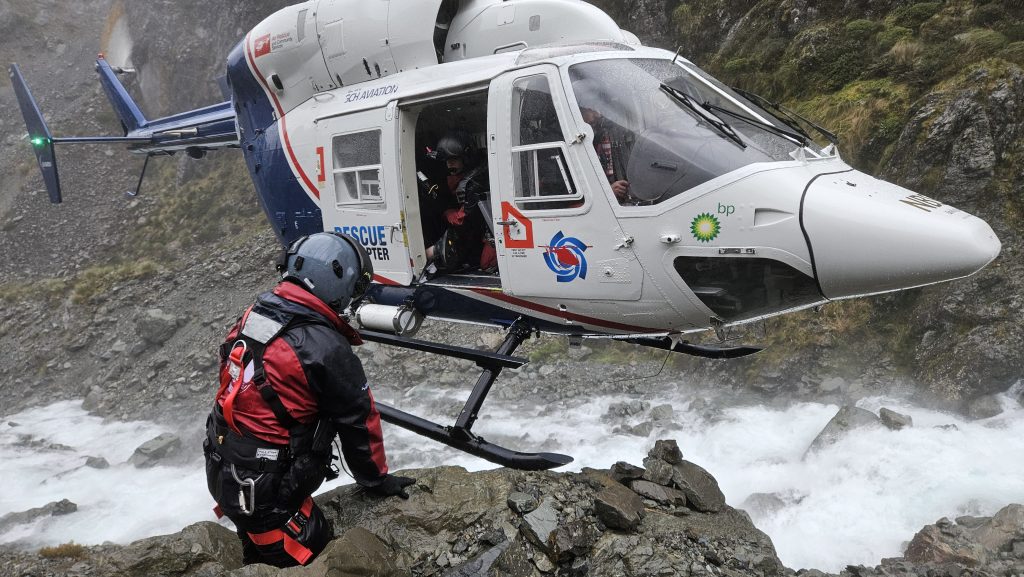
This is one of the least understood differences—and one of the most important for survival.
When time and clarity matter, simplicity saves lives.

Emergency Smartphone SOS is an outstanding backup tool. It is particularly useful for non-life-threatening emergencies, remote travel with a clear view of the sky, and situations where additional context through two-way text is helpful.
But it is not a replacement for a PLB.
If you spend time sailing, bush flying, trail running, or hiking in areas with limited coverage, or if you simply take wilderness safety seriously, your smartphone should be your secondary option, not your primary lifeline.
The Ocean Signal rescueME PLB1 offers:
It works when your phone doesn’t. And it works when it truly matters.
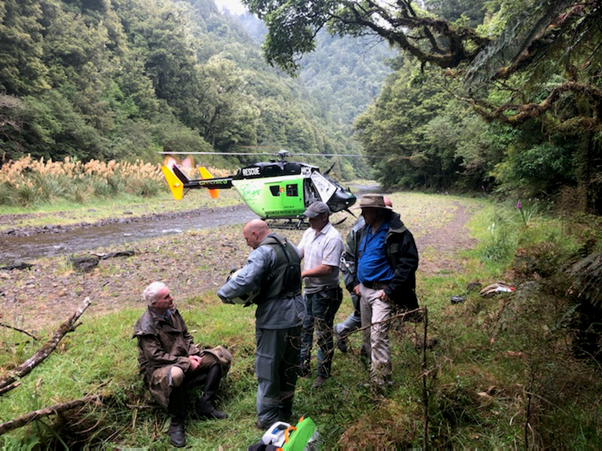
Technology continues to advance quickly, and smartphone SOS features are a remarkable step forward in personal safety. But they do not replace the robustness, reliability, and international rescue integration of a PLB.
If you want the best chance of survival in a real emergency, especially where weather, terrain, or injury reduces your ability to use a phone, a PLB remains the gold standard. The iPhone can support your safety plan, but it shouldn’t be the foundation of it.