Blog
Les 10 meilleurs conseils pour naviguer en toute sécurité : naviguer en toute confiance dans les eaux européennes

If you carry an AIS man overboard (MOB) beacon in your lifejacket, or are in the market for a new AIS MOB, you may be aware of new regulations that came into effect as of 1 January 2025: AIS Class M Regulation.
Before Class M, many AIS MOB devices simply transmitted an AIS message without interacting with other communication systems onboard vessels. Over time, regulators identified two growing issues:
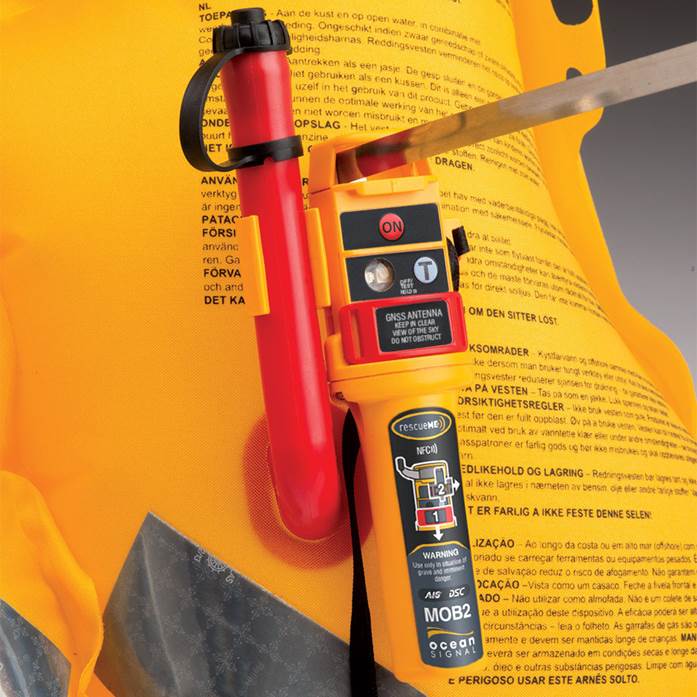
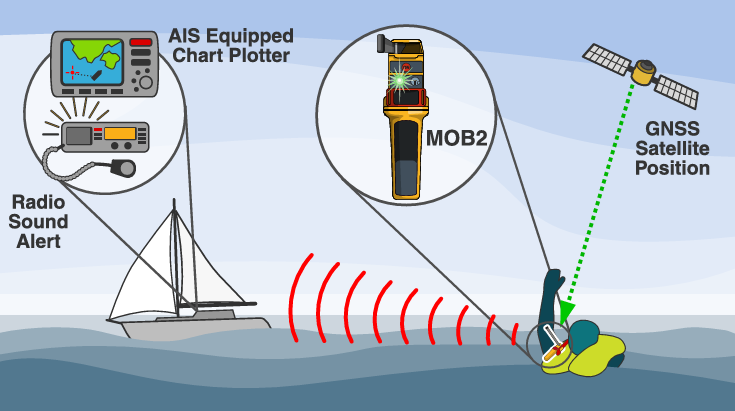
While the Ocean Signal MOB1 does incorporate DSC distress alerting (it contains a DSC transmitter), it does not contain a DSC receiver (making the MOB1 non-Class M compliant). Based on the Class M regulation that came into effect as of January 1, 2025, Ocean Signal introduced the MOB2 at that time in order to have a Class M AIS MOB option available. The MOB2 contains both a DSC transmitter and receiver and is thereby capable of not only transmitting an AIS MOB message and DSC distress signal message, but also capable of receiving confirmation that the distress alert has been acknowledged.
One of the most common questions since the introduction of Class M is whether existing AIS MOB devices can still be used. The answer varies depending on the country, but the overall trend is toward full Class M compliance. In several European nations, non-Class M compliant devices can no longer be sold or licensed, and in some cases their use has already been prohibited. The significance of implementation of the Class M regulation for existing MOB1 owners is that MOB1 beacons may no longer be used in countries that have implemented the new regulation. Click here to access a list of European countries showing where the Class M regulation has been implemented.
If you already own a legacy AIS MOB beacon (such as a rescueME MOB1,) it may still technically function (AIS is AIS), but it may not be compliant in jurisdictions that restrict non-Class M devices.
Also worth remembering: in a real distress situation, the aim is saving life. The point of Class M is to make alerts more reliably noticed, not to discourage carrying safety gear.
Look for one of the following in the spec sheet/manual:
When someone goes overboard, speed matters. In moderate seas you can lose sight of a person fast.
A Class M AIS MOB device:
At the moment, there are no widely reported, clearly documented public cases of leisure sailors being caught or fined specifically for using a non-Class M AIS MOB beacon in UK/EU waters since the January 2025 change. (That doesn’t prove none exist, just that they’re not turning up in public regulator notices or mainstream boating coverage.)
In the UK, at the time of initial publishing of this blog (March 2026), The Office of Communications (Ofcom) website states that licensees can continue to use non-Class M MOB devices on AIS 1 & AIS 2 after 31 December 2024 under the Ship Radio Licence / Ship Portable Radio Licence, while Ofcom brings forward proposals to phase out that authorisation. (www.ofcom.org.uk).
What this means, don’t panic about existing kit in the UK, but new purchases should be Class M to stay future-proof. As mentioned previously, Class M Regulation has already been implemented in numerous European countries. Click here to access a list of European countries showing where the Class M regulation has been implemented.
The consistent themes from boating press, manufacturers, and the wider marine electronics world:
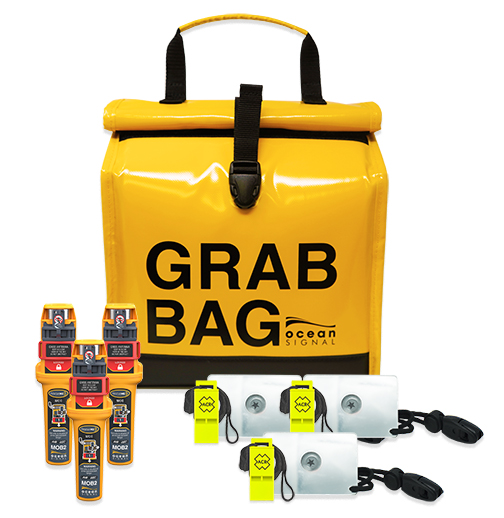
Ocean Signal’s rescueME MOB2 and MOB2 Sailing Safety Kit is designed to meet ECC/DEC/(22)02 (Class M) and combines AIS positioning with VHF DSC alerting for rapid local response.