







 |

EPIRB2 Sailing Safety Kit Plus
Satellite alerting. Visual SOS. One sailing kit.

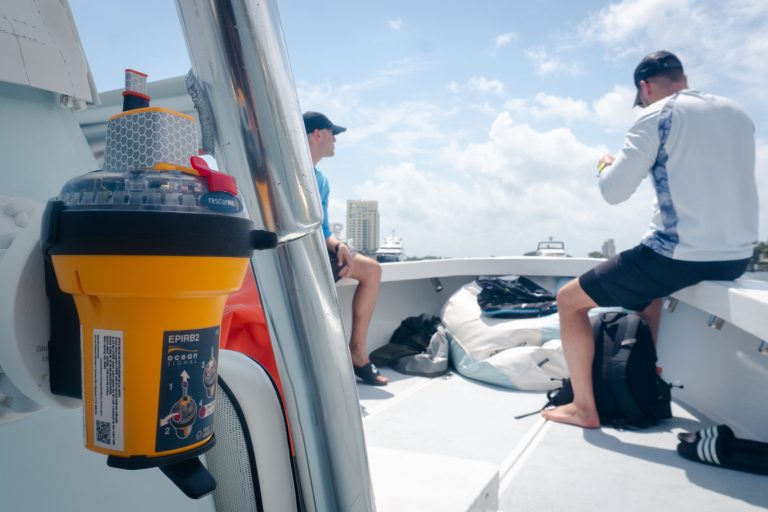
The Ocean Signal EPIRB2 Sailing Safety Kit Plus combines an EPIRB2 satellite distress beacon, rescueME EDF2 electronic distress flare, 9L grab bag, signal mirror and whistle. Built for coastal and offshore sailing, it pairs a call for rescue with a separate visual SOS signal.
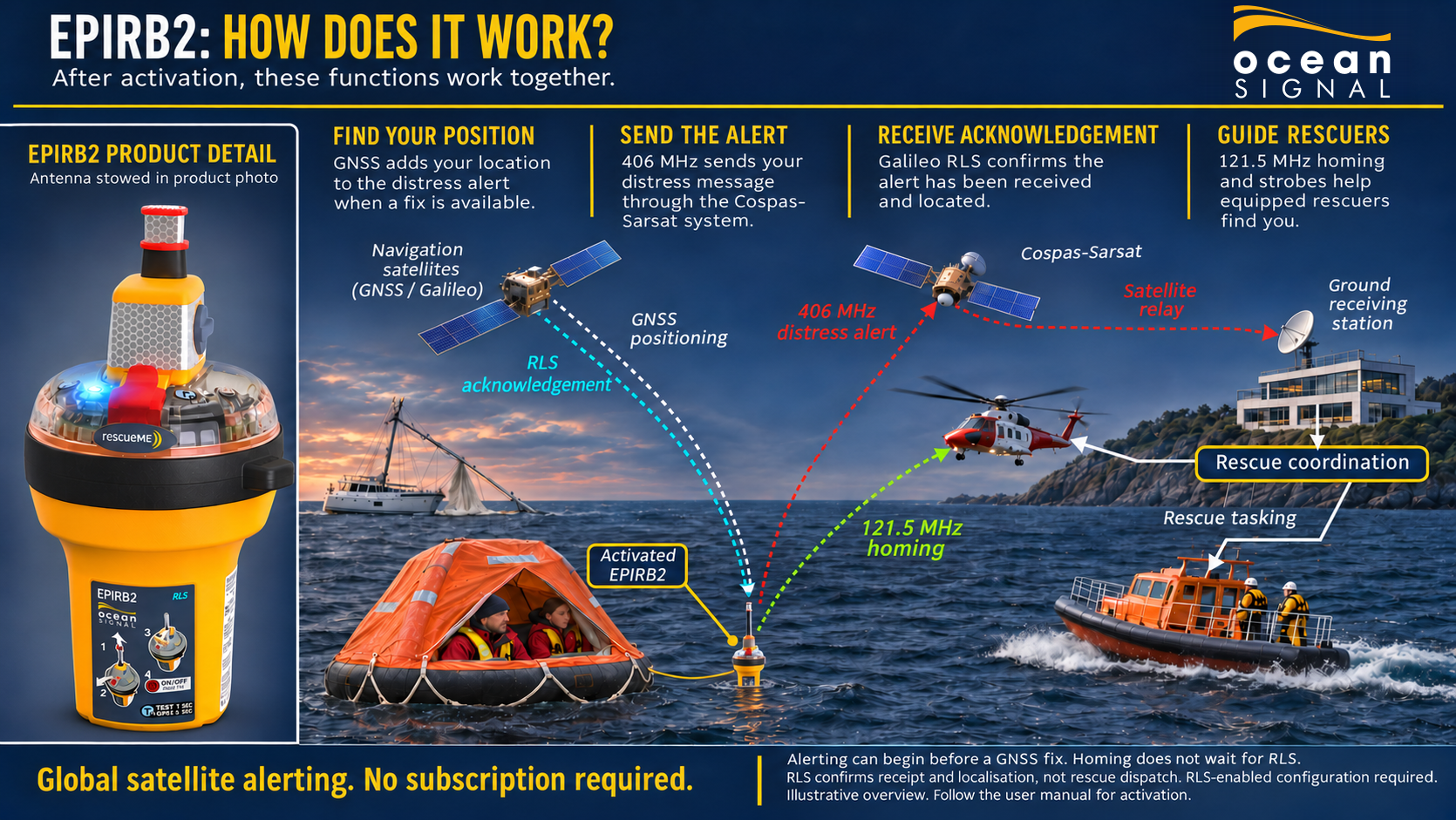
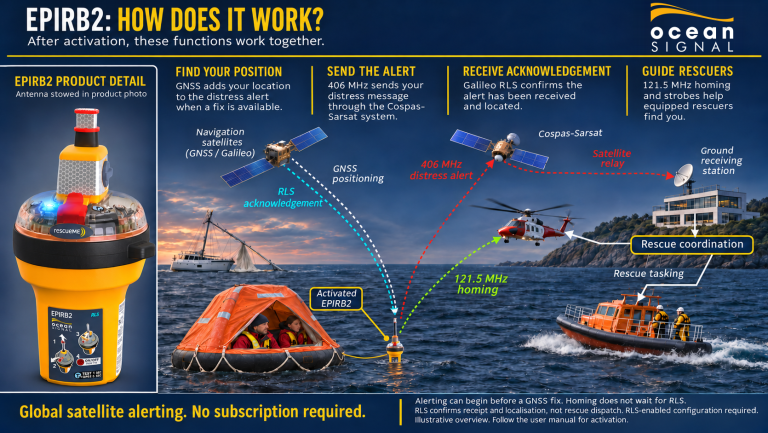
- Alert rescue authorities: EPIRB2 sends a 406 MHz satellite distress alert with your available GNSS position.
- Help rescuers see you: EDF2 adds red-orange, cyan and infrared SOS signalling.
- Keep essentials together: a buoyant, water-resistant grab bag holds your signalling gear.
No satellite subscription. Category II manual-release EPIRB. EDF2 batteries are not included.
Choose your sailing safety kit
What does the Plus kit add?
Both kits include EPIRB2 and the grab bag essentials. Plus adds the rescueME EDF2 electronic distress flare for dedicated visual SOS signalling.
| Included equipment | Standard kit | Plus kit |
|---|---|---|
| EPIRB2 & manual bracket | Yes | Yes |
| 9L bag, mirror & whistle | Yes | Yes |
| EDF2, distress flag, bracket & lanyard | No | Yes |
Already have a suitable visual distress signal? Explore the standard EPIRB2 Sailing Safety Kit. If you only need a vessel beacon, view the standalone EPIRB2.
Global distress alerting
EPIRB2: send a global satellite distress alert.
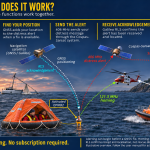
Alert. Position. Home in.
406 MHz · raise the alarm
Your distress message reaches the Cospas-Sarsat system with your beacon identity and available position.
GNSS · send your coordinates
The Global Navigation Satellite System (GNSS) receiver uses GPS, Galileo and GLONASS to calculate the coordinates sent in your distress alert.
121.5 MHz · help rescuers close in
The homing signal helps suitably equipped rescue teams locate the beacon during the final approach.
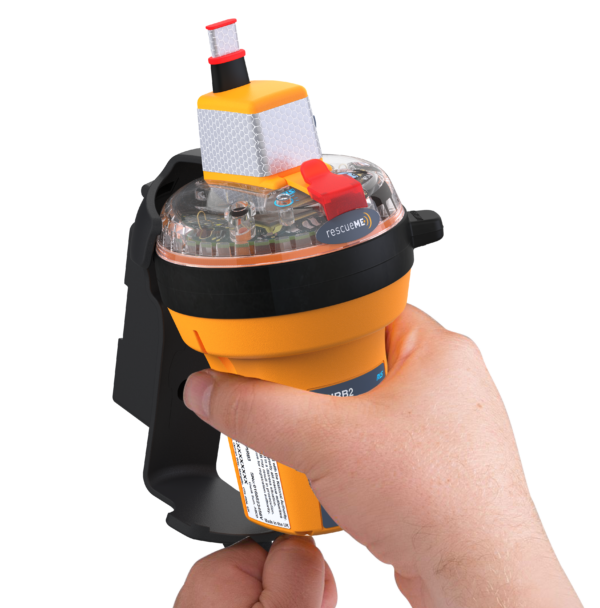
Ready to release by hand.
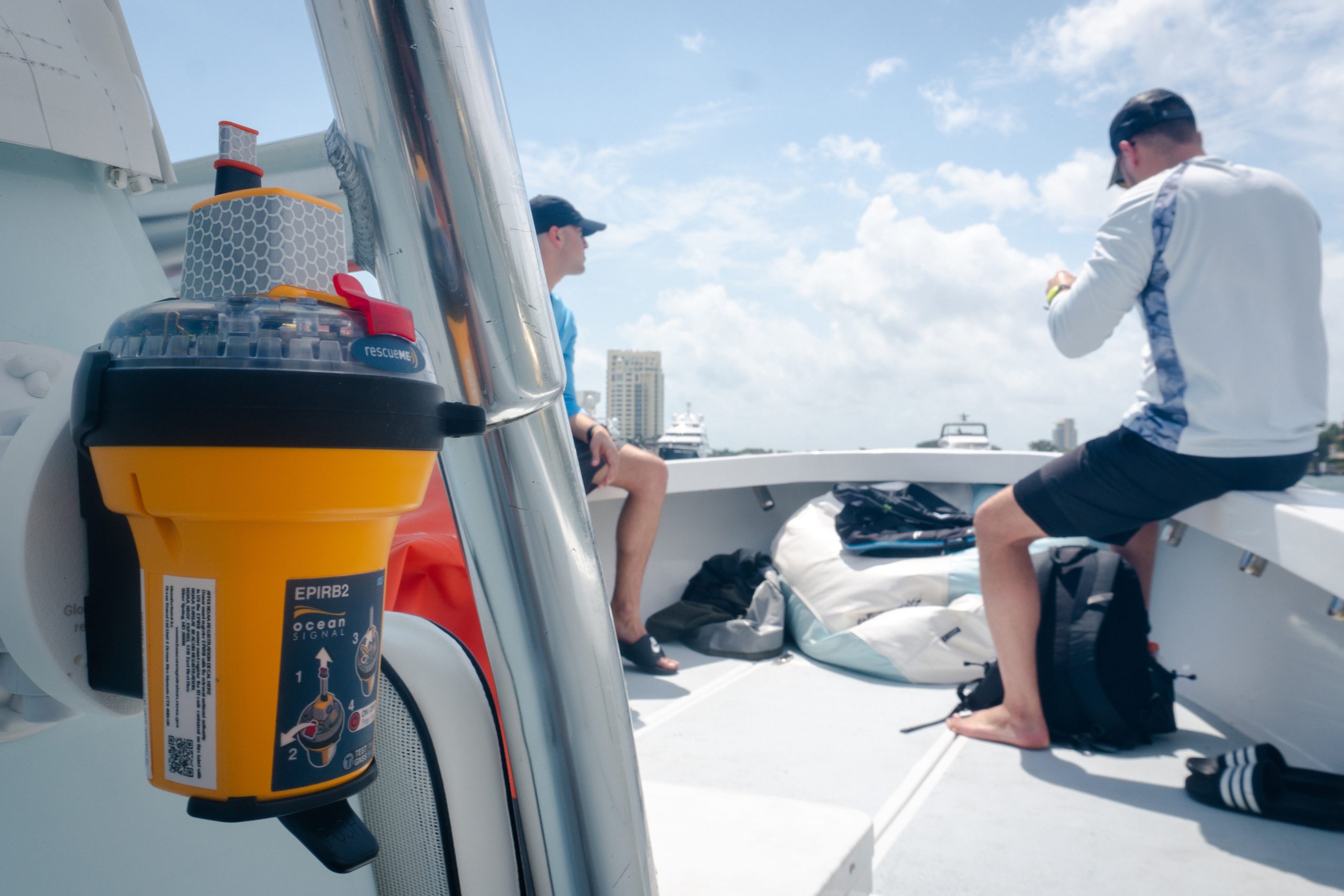
The included Category II bracket keeps EPIRB2 secured on board. It requires manual release. Class 2 water activation works after the beacon is removed from the bracket.

Blue-light RLS acknowledgement.
The RLS acknowledgement confirms receipt and localisation of your distress alert. It does not confirm rescue dispatch or an arrival time. RLS availability depends on country configuration.
Carry it ready. Deploy it in the open.
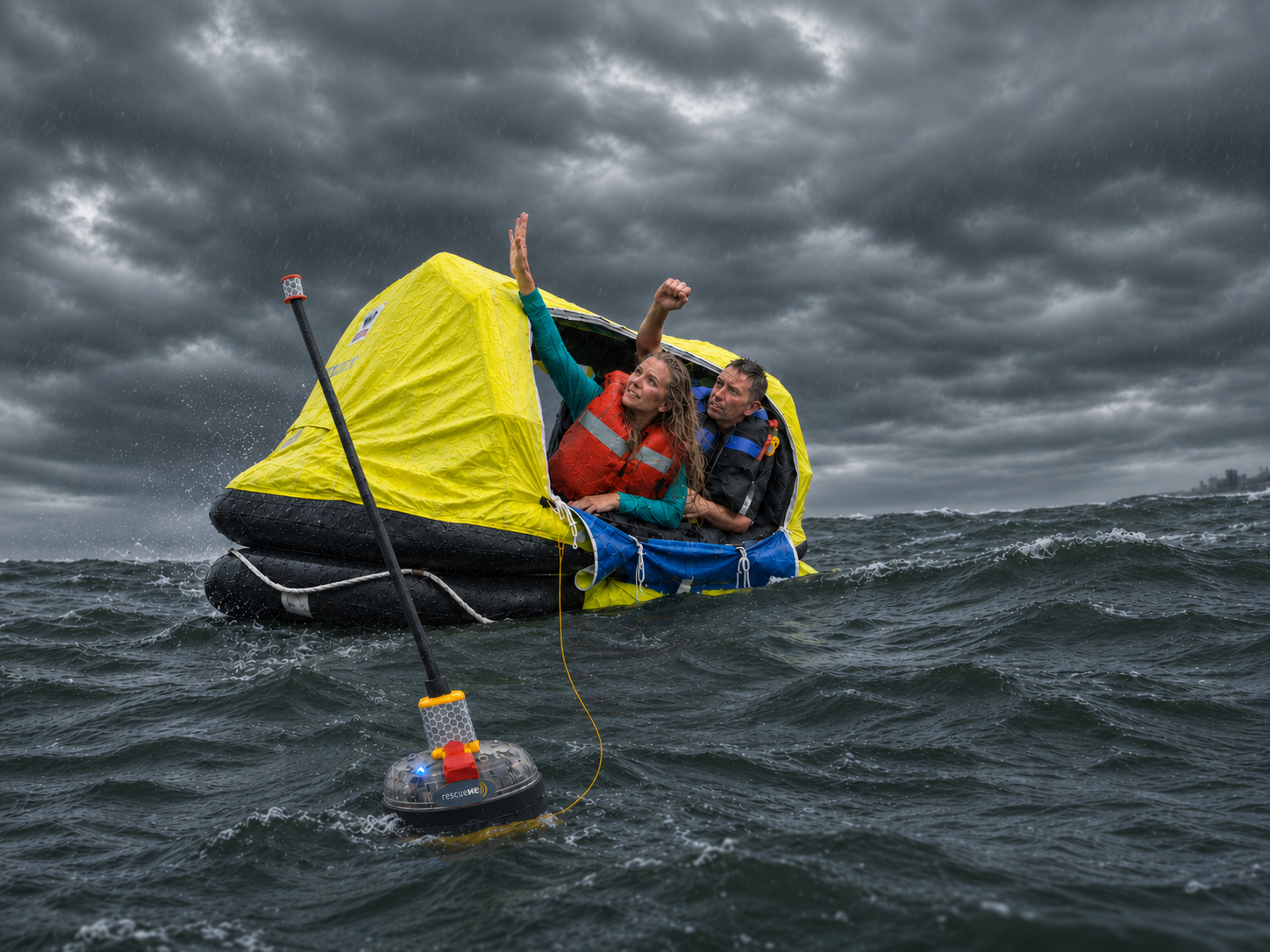
Carry EPIRB2 in your grab bag before use. For best operation, remove it from the bag and float it beside the liferaft, secured to the raft with its lanyard. Fully extend the antenna and keep its upper case clear.
Never tether it to a vessel in danger of sinking. Follow the EPIRB2 user manual.
Connect. Customise. GO.
Program your vessel’s MMSI in minutes at home using the Ocean Signal User Programming Kit, a compatible smartphone and the app. No dealer visit or posting your beacon away.
User Programming Kit required. Supported country settings apply. Programming and national beacon registration are separate steps.
More than 48 hours at −20°C · 10-year battery replacement interval. Follow the expiry label and servicing guidance.
EPIRB2 does not transmit AIS or release automatically. Explore the standalone EPIRB2 →
Added in the Plus kit · rescueME EDF2
rescueME EDF2: help rescuers see you.
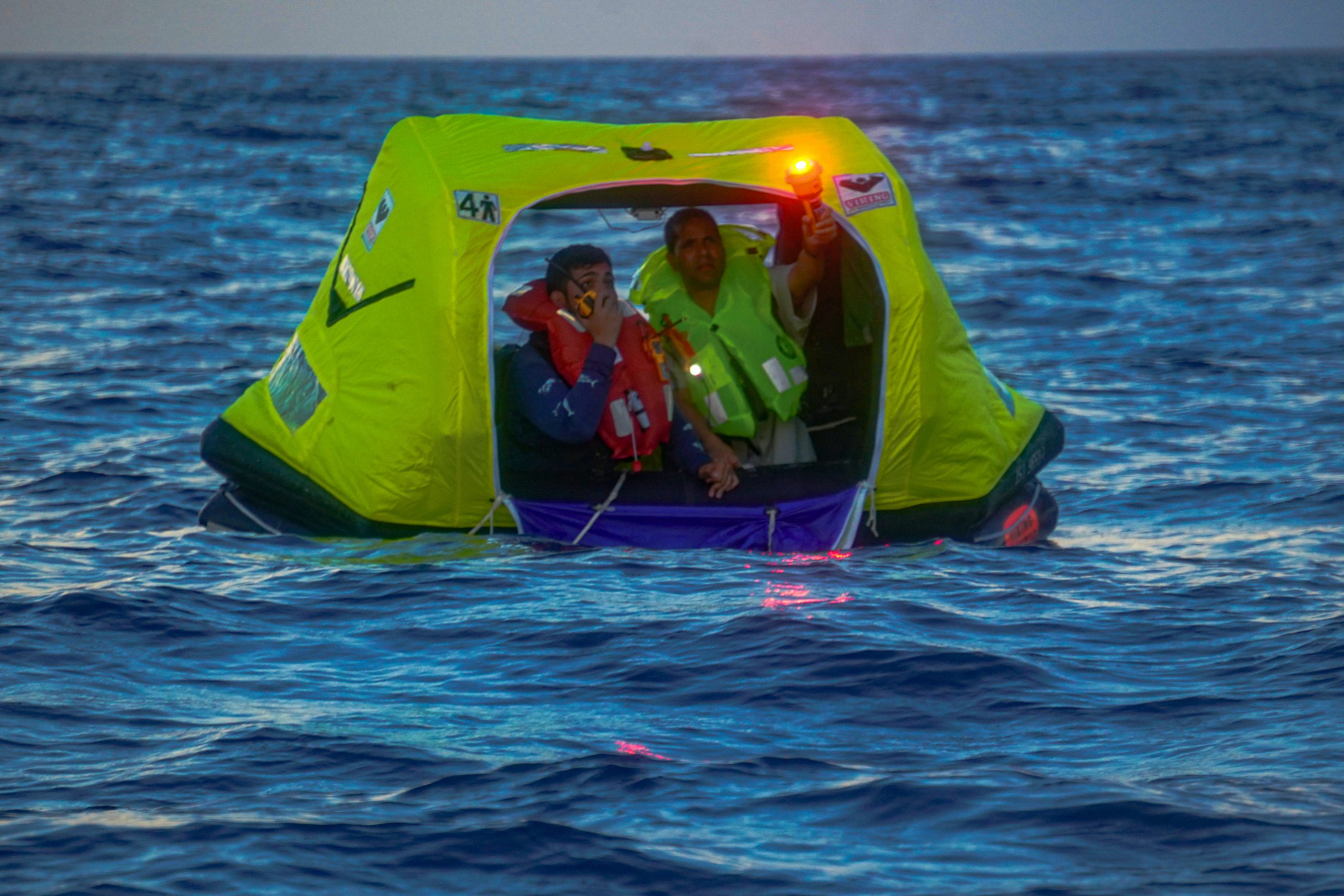
A reusable visual distress signal.
The rescueME EDF2 electronic distress flare produces a bright SOS light to help nearby vessels and rescue crews locate you. It complements EPIRB2’s satellite alert; EDF2 itself does not transmit a distress message to satellites.
- 360° visual signalling: red-orange and cyan LEDs flash the SOS pattern.
- Infrared SOS: helps rescuers using compatible night-vision equipment.
- At least 3 hours: operation at 50 cd average effective intensity.
- Built for the water: IP67 waterproof, buoyant and self-righting.


Prepare before departure: EDF2 requires 8 × user-replaceable CR123 lithium batteries, not included. A daytime distress flag, mounting bracket and 1 m lanyard are supplied.
Carry the distress equipment required for your vessel and voyage.
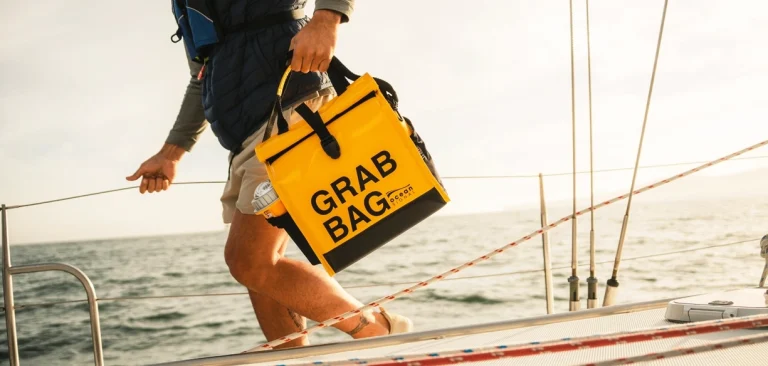
Ocean Signal 9L Grab Bag
Keep your emergency equipment within reach.

A dedicated place for your emergency gear, with space to add the supplies your crew and route need.
- 9-litre main compartment for emergency equipment and passage supplies.
- Two external pockets for an EPIRB or handheld VHF.
- Internal tethering rail to attach important items by lanyard or carabiner.
- Bright, buoyant construction with SOLAS-approved reflective tape.
- Water-resistant, wipe-clean exterior plus a grab handle and adjustable shoulder strap.
Closed size: 42 cm wide × 29 cm high × 17 cm deep.
Vessel ID panel: add your boat name, call sign and MMSI.
Signal mirror and whistle included.
Use the mirror to direct sunlight towards a vessel or aircraft, and the whistle to attract attention nearby. Add your own water, food, medication and other passage supplies; these are not included.
Real-world EPIRB rescue evidence
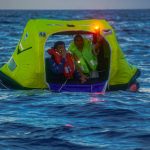
A flooded boat. Four sailors in a life raft.

Sailing · John & David
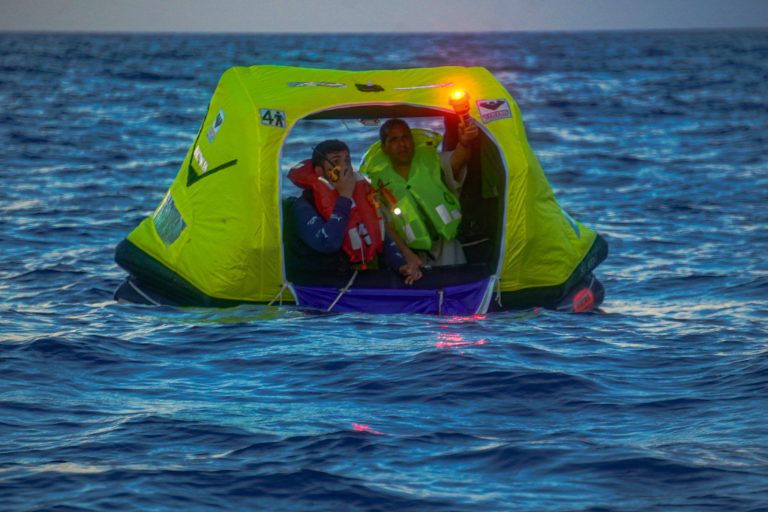
After their yacht struck submerged rocks, water entered faster than the crew could remove it. Four sailors abandoned the boat into a life raft, taking their Ocean Signal EPIRB1 with them.
They activated the beacon. A U.S. Coast Guard aircraft and nearby vessels became part of the rescue that brought all four crew members to safety.
“When it really must work… it really does work!”
John & David, Ocean Signal survivor story.
This rescue involved an EPIRB1. It shows how a vessel EPIRB can support a rescue; outcomes and response times vary.
The 406 Survivor Club
Use your Ocean Signal PLB or EPIRB in a genuine lifesaving emergency, share your rescue story and apply for a free replacement beacon. Programme eligibility and verification apply.
Ocean Signal customer feedback
What Ocean Signal customers say
Customer feedback across Ocean Signal products and service.
Product details & support
EPIRB2 and EDF2 specifications.
| Satellite alerting | 406.031 MHz · Cospas-Sarsat |
|---|---|
| Positioning | 72-channel GNSS · GPS, Galileo and GLONASS |
| Local homing and strobes | 121.5 MHz · visible white and infrared strobes |
| Return Link Service | RLS acknowledgement; country configuration applies |
| Deployment | Category II manual release; no AIS transmission |
| Activation | Class 2: manual or water activation after bracket removal. Class 3: manual only. |
| Emergency operation | More than 48 hours at −20°C, subject to battery condition |
| Battery replacement | 10-year interval; follow the expiry label and replace after activation as directed |
| App and programming | NFC status access; MMSI programming requires the User Programming Kit, compatible phone and app |
| Visible signal | Red-orange and cyan LEDs · SOS flash pattern |
|---|---|
| Infrared signal | SOS flashes for compatible night-vision equipment |
| Operation | At least 3 hours at 50 cd average effective intensity |
| Water performance | IP67 waterproof · buoyant and self-righting |
| Batteries | 8 × CR123 lithium batteries · user-replaceable · not included |
Included in this kit
- 1 × rescueME EPIRB2 and manual mounting bracket
- 1 × rescueME EDF2, daytime distress flag, mounting bracket and 1 m lanyard
- 1 × Ocean Signal 9L Grab Bag
- 1 × ACR signal mirror and 1 × whistle
- Beacon user guide, labels and three mounting screws
EDF2 batteries are not included. MMSI self-programming requires the User Programming Kit, a compatible phone and the app. Ask us about programming before ordering.
Product documents & setup
English documents unless stated otherwise.
Register the beacon before use, follow its testing guidance and use an authorised service centre for battery replacement. Warranty and returns policy →
Before your next voyage
EPIRB2 Sailing Safety Kit Plus FAQs
Are EDF2 batteries included?
No. EDF2 uses 8 × CR123 lithium batteries, which you need to supply. Fit the specified batteries and follow the supplied instructions before departure.
Do I need a satellite subscription or mobile coverage?
No. EPIRB2 sends its emergency alert through the Cospas-Sarsat satellite system. Its distress alert does not need a phone, mobile network or power from the boat.
Can I program my vessel’s MMSI myself?
Yes. Use the Ocean Signal User Programming Kit, a compatible smartphone and the app, following the supported country settings. Programming and national beacon registration are separate steps. Ask Ocean Signal about the setup you need.
Does EPIRB2 have AIS or automatic float-free release?
No. EPIRB2 has no AIS transmitter and its included Category II bracket requires manual release. Explore EPIRB3 for AIS or EPIRB2 Pro for automatic release.
Is the grab bag waterproof?
The bag is water-resistant and buoyant. Give water-sensitive items separate waterproof protection and check the packed bag’s buoyancy before departure.
Can EDF2 replace the flares I am required to carry?
Do not assume an electronic flare replaces mandatory pyrotechnic equipment. Requirements depend on your country, vessel and event. Check the rules for your voyage; UK boat owners can read the RYA guidance on electronic visual distress signals.
Is this everything I need for offshore sailing?
No. This kit supplies distress-signalling equipment and a grab bag. Add water, food, medication, communications equipment and other supplies for your crew and voyage. Fit and check the EDF2 batteries, register and test EPIRB2, and brief everyone on where the equipment is kept.
The people behind your beacon
Who are Ocean Signal?
Ocean Signal designs and manufactures marine safety and rescue technology in Margate, Kent. Its rescueME range includes personal locator beacons and EPIRBs that help people call for rescue.